AI Agent Development: What to Automate vs Keep Human
 Sharan Sifat15 min read1 views
A senior engineer's framework for AI agent development: which tasks to automate, which to keep human, and the guardrails that keep an autonomous system accountable.
On this page
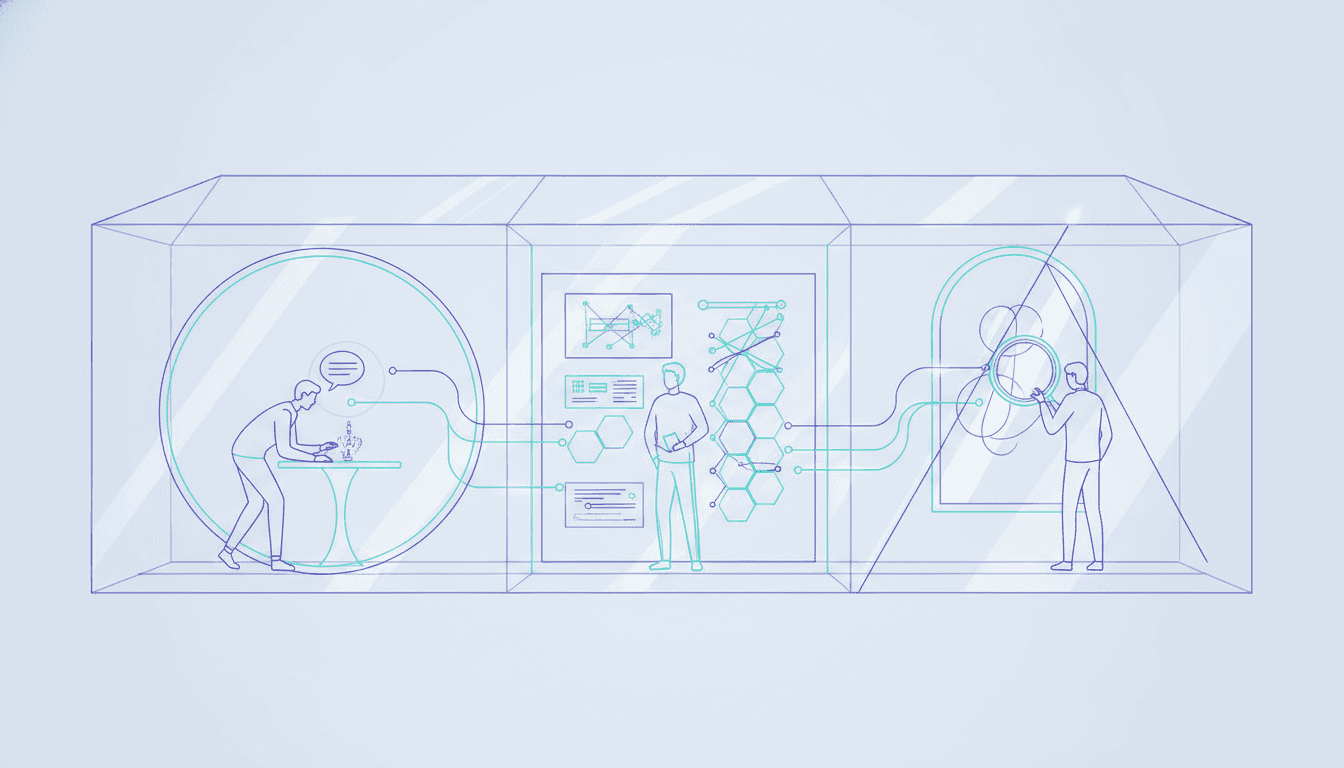
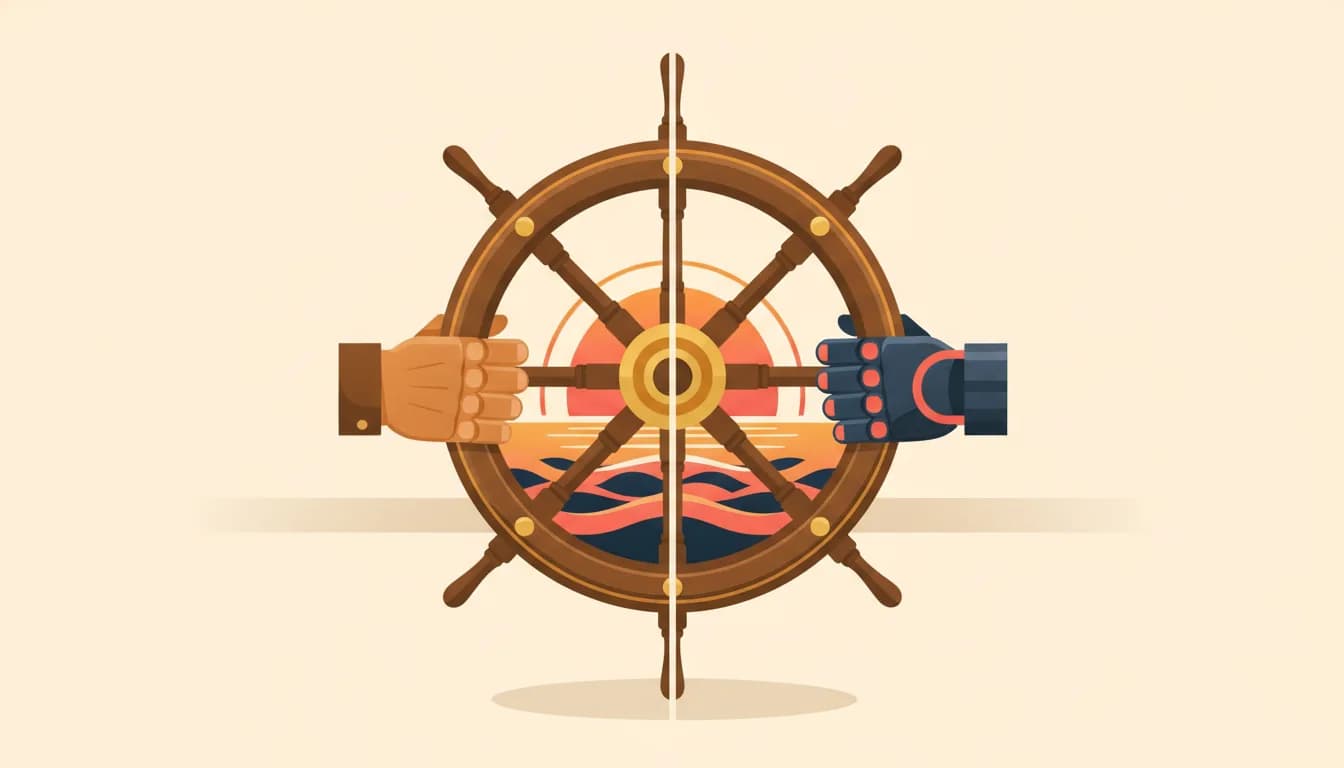
The most important decision in AI agent development is not which model you pick or which framework you wire up — it is drawing the line between what the agent does on its own and what a human still owns. Get that line right and an agent quietly clears triage, drafts, and data cleanup while your team spends its hours on judgment calls. Get it wrong and you have shipped a confident, tireless system that makes irreversible mistakes at machine speed.
This guide gives you a practical framework for that decision, built on four questions we ask on every project: how reversible is the task, how large is the blast radius, how much human judgment does it need, and how expensive is it to check the result. We will walk through real examples — support, data entry, and drafting — and the guardrails that keep an autonomous system honest.
The short version: automate the work that is frequent, low-risk, and easy to verify; keep humans in the loop for anything irreversible, high-stakes, or judgment-heavy; and design the handoff between them deliberately instead of hoping it emerges on its own.
- Decide per task, not per department — score each task on reversibility, risk, judgment, and oversight cost before you automate it.
- Use three modes — auto-run, draft-and-approve, and human-only — instead of a binary "automated or not".
- Automate frequent, low-stakes, easy-to-verify work (triage, extraction, first drafts); keep money movement, legal commitments, and safety calls human.
- Guardrails matter more than model choice: confidence thresholds, spending caps, allow-listed tools, audit logs, and staged rollout.
- The point of AI agent development is leverage with accountability, not replacing the people who own outcomes.

What is AI agent development, really?
Before you can decide what to automate, it helps to be precise about what an "agent" is — because the word gets stretched to cover everything from a scripted FAQ bot to a system that can book flights and move money.
Agent vs chatbot vs workflow
A chatbot answers questions. A workflow runs a fixed sequence of steps you defined in advance. An AI agent sits beyond both: it takes a goal, decides which steps and tools to use, observes the result, and adapts. The defining trait is that the agent chooses actions — it can call an API, query a database, send an email, or issue a refund — rather than only producing text.
That distinction is the whole reason the automate-or-not question matters. A chatbot that hallucinates gives a wrong answer, and a wrong answer is annoying. An agent that hallucinates can take a wrong action, and actions have consequences that text does not. The blast radius of a bad sentence is a confused reader; the blast radius of a bad tool call can be a charged card or a deleted record.
Why "just give it tools" changes the risk calculation
The moment you connect an agent to tools — a payment API, your CRM, a production database — you have handed it the ability to change the state of the world. In AI application development we treat every tool an agent can call as a permission granted to a system that is probabilistic, not deterministic. The right question is never "can the model do this?" It is "what happens the one time in a thousand it does this wrong, and can we catch it before it lands?" If you cannot answer the second half, the tool does not get connected yet.
What should you actually automate?
We do not decide by department ("automate all of support") or by hype ("agents can do anything now"). We decide task by task, scoring each one on four axes. The axes are simple on their own, but together they sort almost any task into the right lane.
1. Reversibility: can you cheaply undo it?
Reversibility is the single strongest signal, so we weight it heaviest. A draft email sitting in a review queue is fully reversible — delete it and nothing happened. A sent email is not. A database row you can restore from a soft-delete is reversible; a hard delete propagated to three downstream systems is not. When a task is cheap to undo, the cost of an AI mistake is close to zero, and you can let the agent run. When it is expensive or impossible to undo, the mistake is permanent, and a human belongs in the path.
2. Blast radius: how bad is the worst case?
Reversibility asks "can we undo it?" Blast radius asks "how many people, dollars, or systems does one bad action touch?" Mislabeling a single support ticket has a tiny radius. Sending the wrong dunning email to your entire customer base has a large one. We map the worst realistic failure, not the average case, because agents fail in bursts — a bad prompt or a poisoned input can produce dozens of wrong actions before anyone notices.
3. Judgment: does it need context, ethics, or taste?
Some tasks are mechanical; some require weighing things a model has no stake in. Approving a pricing exception for a strategic account, deciding whether a refund sets a precedent, choosing the tone for a reply to a grieving customer — these need context the agent does not have and consequences it will not feel. Judgment-heavy work stays human even when it is technically automatable, because "the model produced a plausible answer" is not the same as "someone accountable decided."
4. Oversight cost: how expensive is it to check the result?
This is the axis teams forget, and it quietly kills ROI. If verifying the agent's output takes as long as doing the task yourself, you have not saved anything — you have added a step. The best automation candidates are cheap to verify: classification you can spot-check, extraction you can validate against a schema, drafts a human skims in seconds. When checking is as hard as doing, keep it human or invest in making the output verifiable before you scale it.
Automate what is frequent, reversible, and cheap to verify; keep humans on what is rare, irreversible, and expensive to judge.
A framework: automate, augment, or keep human
Rather than a binary switch, we sort every task into one of three modes. The scoring above tells you which lane a task belongs in, and the lane tells the agent — and the human — exactly what their role is.
The three modes
Auto-run means the agent acts on its own and a human audits samples after the fact. Draft-and-approve means the agent does the work but a human clicks "approve" before anything leaves the building. Human-only means the agent stays out of the action entirely, though it may still surface information to help the person decide. Most systems we ship use all three at once, with individual tasks graduating from draft-and-approve to auto-run once the evidence says they are safe.

| Mode | Best for | Human's role | Example tasks |
|---|---|---|---|
| Auto-run | Frequent, reversible, low risk, easy to verify | Audits a sample of outputs after the fact | Tagging and routing tickets, extracting invoice fields, summarizing threads |
| Draft-and-approve | Consequential but judgment-light, medium stakes | Reviews and approves each action before it executes | Drafting customer replies, proposing refunds under a cap, scheduling changes |
| Human-only | Rare, irreversible, high judgment or high stakes | Owns the decision; the agent may advise but never acts | Pricing exceptions, legal sign-off, offboarding a customer, safety calls |
When you are unsure which lane a task belongs in, start it in draft-and-approve. It is the only mode that lets you measure the agent's real accuracy on live data without paying for its mistakes — the human approvals become your labeled evaluation set for free.
Real examples: support, data entry, and drafting
Frameworks are easy to nod along to and hard to apply. Here is how the same three modes land in three of the most common places teams reach for an agent.
Customer support
Auto-run: triage, tagging, language detection, routing to the right queue, and drafting answers grounded in your knowledge base. These are frequent, reversible, and easy to spot-check. Draft-and-approve: refunds, plan changes, and anything that edits an account — the agent proposes the action and a human confirms. Human-only: churn-risk escalations, complaints with a legal edge, and any exception that sets a precedent.
Money is where support agents earn their guardrails. Because a card charge on Stripe carries a 2.9% + 30¢ processing fee that is not returned to you when you refund the charge, an agent that issues refunds carelessly burns real money on every mistake — you lose the fee on the way in and again on the way out. That single fact is why refunds live in draft-and-approve with a hard dollar cap, not in auto-run, no matter how good the model looks in testing.
Data entry and extraction
This is the sweet spot for auto-run, because the output is cheap to verify. Pulling structured fields out of invoices, contracts, or forms and validating them against a schema means every result is checkable by a machine before a human ever sees it. When a field fails validation — a date that will not parse, a total that does not add up — the item drops into a human queue automatically. That pattern, agent extracts and validates while humans handle only the exceptions, is the backbone of most business automation we build. The connective tissue is usually a set of clean, well-typed endpoints, which is why we pair these agents with solid API development and integration so the agent talks to your systems through contracts, not scraping.
Drafting and content
Auto-run: first drafts, internal summaries, meeting notes, changelog entries — low-stakes text a human will edit anyway. Draft-and-approve: anything customer-facing, because tone and accuracy carry your brand. Human-only: final voice, positioning, and sensitive communications. The reliable win here is treating the agent as a fast first drafter, not a publisher. If you want a concrete menu of starting points, our guide to AI-powered features you can add to your app today covers the ones that pay off first.

What should you never fully automate?
Some tasks fail the framework so decisively that the answer is always human-only, at least until your evidence is overwhelming. They share a shape: irreversible, high blast radius, and heavy on judgment.
Money movement above a small, hard cap. Legal or contractual commitments. Anything safety-related. Irreversible deletes of customer or financial data. Hiring, firing, and offboarding decisions. Public statements made in your name. In every case the cost of a rare mistake dwarfs the labor you would save, and "the model was confident" is not a defense you want to give a customer, a regulator, or a court.
Notice these are not banned forever — they are banned from auto-run. An agent can absolutely draft the refund, prepare the contract redlines, or assemble the offboarding checklist. It simply does not get to be the one who pulls the trigger.
Guardrails that make AI agents safe to ship
The line between "impressive demo" and "system we trust in production" is almost never the model — it is the guardrails around it. These are layered on purpose: like a castle gate, each layer is cheap and independent, so no single failure lets a bad action through.
Human-in-the-loop for irreversible actions
The first guardrail is structural: irreversible actions require an approval step, full stop. This is not a fallback for when the model is unsure — it is a permanent gate for a class of actions, regardless of confidence, because confidence is exactly the thing a hallucinating model reports incorrectly.
Confidence thresholds and graceful escalation
For everything else, the agent should know when it is out of its depth. When a task's confidence — or a validation check — falls below a threshold, the item escalates to a human queue instead of guessing. A good agent's most valuable skill is saying "I am not sure, a person should look at this."
Spending caps, allow-listed tools, and least privilege
Give the agent the narrowest set of tools that does the job, and put hard limits on the dangerous ones. A refund tool with a per-transaction and daily cap cannot drain an account even if it is called in a loop. An agent that only needs to read the database gets read-only credentials. Least privilege is old security wisdom, and it applies double to a component that decides its own actions.
Audit logs and traceability
Every action an agent takes should be logged with its inputs, the reasoning or tool call, and the outcome — the same standard you would hold a human operator to. When something goes wrong (and something will), you need to reconstruct exactly what happened, and when it goes right, those logs are how you build the case to graduate a task from draft-and-approve to auto-run.
Evaluations, and defending against prompt injection
Before launch, we run the agent against a fixed set of known cases and measure accuracy; after launch, the human approvals from draft-and-approve become an ever-growing evaluation set. Two frameworks worth reading here: the NIST AI Risk Management Framework for structuring how you govern the system, and the OWASP Top 10 for LLM Applications for the attack surface. The one every agent builder must internalize is prompt injection: an agent that reads untrusted content — an inbound email, a scraped web page, a user-uploaded document — can be manipulated by instructions hidden in that content. This is precisely why tool permissions and spending caps matter: they contain the damage when, not if, an injection slips through.
Design the "unhappy path" first. Before you build the flow where the agent succeeds, build the flow where it fails a validation check, hits a spending cap, or gets confused — and make sure that path routes cleanly to a human with full context. Agents that degrade gracefully feel far more trustworthy than agents that are occasionally brilliant.
How we build and roll out AI agents at Bracket Coder
Our process is deliberately unglamorous, because the failures we have seen elsewhere come from skipping steps, not from weak models. We start with a task map — every candidate task scored on the four axes and sorted into the three modes. Nothing ships in auto-run on day one. Everything consequential ships in draft-and-approve, so the first weeks in production double as a live evaluation with a human safety net.
As the audit logs accumulate and a task proves it clears the accuracy bar we agreed on, we graduate it to auto-run one task at a time, never all at once. The result is a system that earns autonomy rather than being handed it. You can see this staged approach in our case studies, and if you are scoping a build, the fastest way to a realistic estimate is a tight software project brief — it tells us which tasks are actually reversible and cheap to verify, which is what drives both the design and the price.
Frequently asked questions
How is an AI agent different from a chatbot?
A chatbot produces text — it answers questions. An AI agent takes actions: it can call APIs, update records, or send messages, and it chooses which steps to take toward a goal. That ability to act is why agents need guardrails a chatbot does not, since a wrong action has real-world consequences a wrong sentence does not.
Which tasks give the fastest return when automated?
Tasks that are frequent, reversible, and cheap to verify — ticket triage and routing, structured data extraction that can be validated against a schema, and first-draft generation. These pay off quickly precisely because a human can confirm the result in seconds, so the time saved is real rather than shuffled into a review bottleneck.
How do you stop an AI agent from making expensive mistakes?
Layered guardrails: mandatory human approval for irreversible actions, confidence thresholds that escalate uncertain cases, spending caps and least-privilege tool access, full audit logs, and staged rollout from draft-and-approve to auto-run. No single control is trusted on its own; the layers are cheap and independent so one failure does not become an incident.
Can an AI agent handle customer support entirely on its own?
For the routine, reversible slice — triage, tagging, and knowledge-base answers — yes, in auto-run. For refunds and account changes, keep it in draft-and-approve with hard caps. For escalations, legal-edged complaints, and precedent-setting exceptions, keep it human-only. Full autonomy across all of support is the wrong goal; the right goal is autonomy on the parts that are safe.
How much does it cost to build an AI agent?
It depends far more on the tasks than the model — how many tools it touches, how much validation and human-in-the-loop tooling it needs, and how deep the integrations run. The cleanest way to a real number is a scoped brief; our pricing page and a short scoping call will get you a range grounded in your actual workflow rather than a guess.
Do we need to replace our team with agents?
No, and the teams that try usually regret it. The framework in this article is built to keep accountable humans on the decisions that matter while the agent absorbs the repetitive, verifiable work around them. The aim is leverage, not headcount reduction — the same people, freed from the tasks a machine does well.
If you are weighing which parts of your workflow are safe to hand to an agent and which should stay human, we can help you draw that line and build the guardrails around it. Talk to our team about your AI agent project and we will map your tasks to the right modes before a single line of code is written.
Sources
Have a project like this in mind?
Tell us what you're building and we'll map out the scope, timeline and a fixed starting quote — no obligation.
Start your project